Arduino Example Code
const int sensorPin = 2;

void setup() {
  Serial.begin(9600);
  pinMode(sensorPin, INPUT);
}

void loop() {

  if (digitalRead(sensorPin) == LOW) {
    Serial.println("Dry Soil Detected - Water Required");
  } else {
    Serial.println("Soil Moisture OK");
  }

  delay(500);
}
Typical Wiring
HW-824 VCC -> Arduino 3.3V or 5V
HW-824 GND -> Arduino GND
HW-824 OUT -> Arduino Digital Pin 2
How It Works
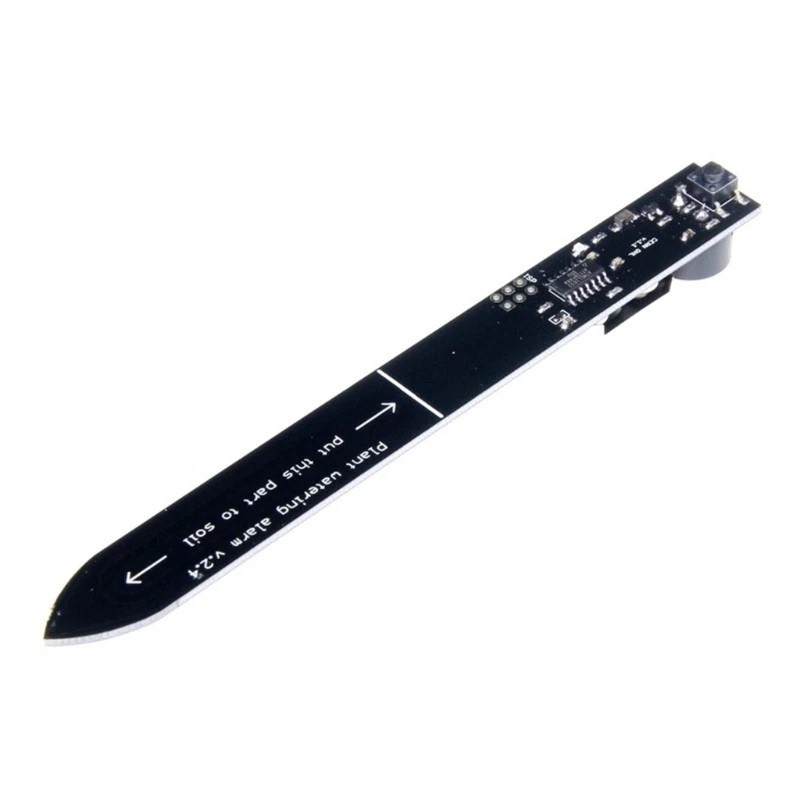
The sensor measures the electrical conductivity of the soil through its exposed probe. When the soil becomes dry, conductivity decreases and the onboard comparator detects the change.
Once the moisture level falls below the threshold set by the adjustment potentiometer, the module activates its output and onboard buzzer, providing an immediate indication that watering may be required.
Adjusting Sensitivity
The onboard trimpot allows you to fine-tune the trigger point for your specific application.
- Turn one direction to trigger sooner in slightly dry soil.
- Turn the opposite direction to trigger only when soil becomes very dry.
- Test and adjust with your preferred soil type for best results.
Common Applications
- Plant watering alerts
- Indoor plant monitoring
- Greenhouse automation
- Smart gardening projects
- Educational electronics projects
- Arduino and ESP32 monitoring systems
- Automatic irrigation control systems
Usage Tips
To maximise probe life, avoid leaving the sensor permanently powered in wet soil when continuous monitoring is not required. Many projects power the sensor only briefly while taking a measurement.
Different soil types have different conductivity characteristics, so the trigger point may require adjustment when moving between potting mix, garden soil, sandy soil, or hydroponic growing media.
Keep the sensing area clean and free from fertiliser build-up to maintain consistent performance and reliable moisture detection.



 Arduino Modules & Sensors
 Battery Compartments
 Component Cases
 Electronics Kits
 Microcontroller Boards
 Project Enclosures
 Shields & Hats
 Tablets
 Laptops
 Laptop Accessories
 CPU (Processor)
 CPU Coolers
 GPU (Graphics)
 HDD/ SSD (Storage)
 MOBO (Motherboard)
 PSU (Power Supply)
 RAM (Memory)
 Keyboard & Mouse Combo
 Keyboards
 Printers
 USB