Typical Electrical Specifications
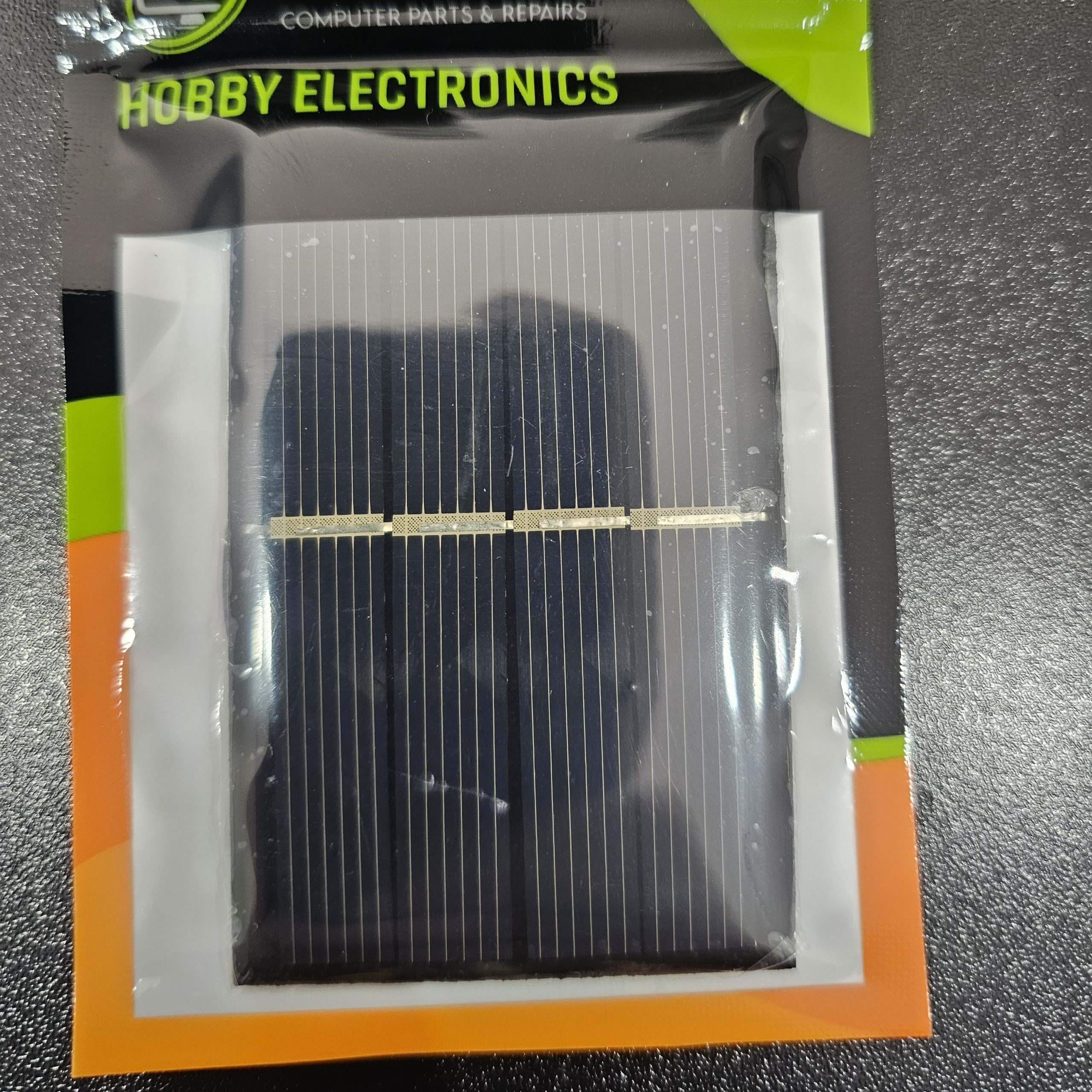
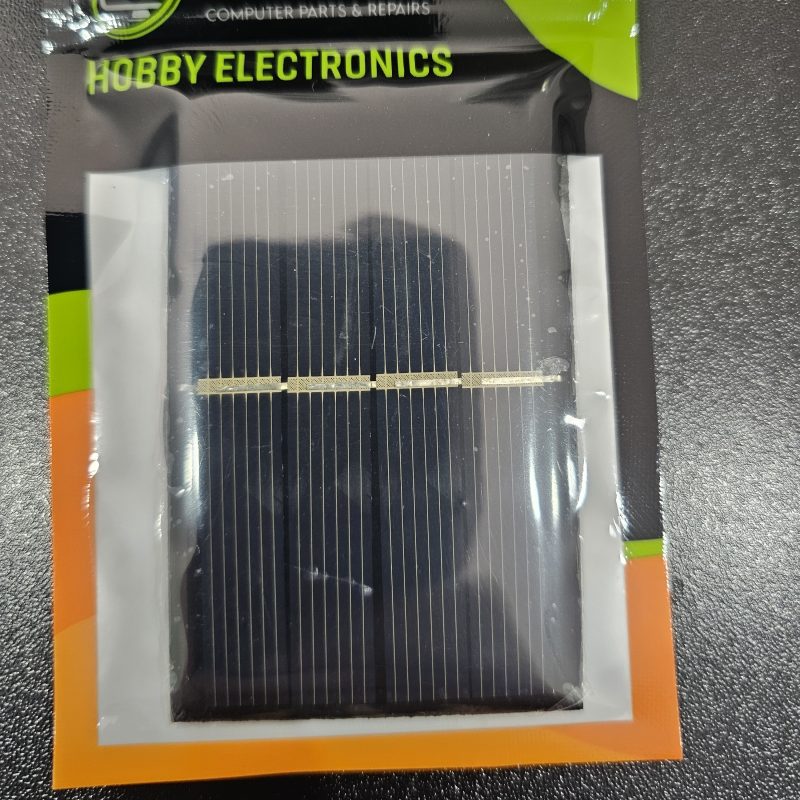
Nominal Voltage: 2V
Rated Current:   Up to approximately 300mA
Panel Size:      50mm × 80mm
Output Type:     DC
Rated Power:     Approximately 0.6W
The rated voltage and current represent operation under suitable lighting conditions. Output will normally be significantly lower indoors, in cloudy weather, under partial shade, or when the panel is not positioned correctly toward the sun.
Basic Wiring
Solar Panel + -> Positive input of your circuit
Solar Panel - -> Ground / Negative input
Before connecting the panel to sensitive electronics, use a multimeter to confirm its polarity and output voltage.
Testing the Panel with a Multimeter
- Place the solar panel in direct sunlight.
- Set your multimeter to DC voltage.
- Connect the red probe to the positive terminal.
- Connect the black probe to the negative terminal.
- Read the generated voltage on the multimeter.
The open-circuit voltage may be somewhat different from the nominal 2V rating. Voltage will also change when an electrical load is connected to the panel.
Understanding the 300mA Rating
The 300mA rating does not mean the panel will continuously provide 300mA in all conditions. Available current is strongly affected by the amount of light reaching the solar cells.
Strong Direct Sunlight -> Higher Available Current

Cloudy Conditions      -> Reduced Available Current

Indoor Lighting        -> Much Lower Available Current

Partial Shading        -> Reduced Panel Performance
When designing a solar-powered project, allow additional capacity rather than assuming the panel will continuously operate at its maximum rated output.
Example: Powering a Small DC Motor
The relatively high current capability of this panel makes it suitable for experimenting with some small low-voltage DC motors.
Solar Panel +
     |
     v
Small DC Motor
     |
     v
Solar Panel -
Motor speed will vary depending on sunlight intensity. Always confirm that the motor's voltage and current requirements are suitable for the panel before connecting it.
Using Multiple Panels in Series
Connecting matching solar panels in series increases the available voltage while the current capability remains approximately the same.
Two 2V 300mA Panels in Series:

Panel 1 + -> Positive Output
Panel 1 - -> Panel 2 +
Panel 2 - -> Negative Output

Approximate Result:

4V
300mA
1.2W
For example, two matching 2V panels can provide approximately 4V, while three panels can provide approximately 6V under suitable conditions.
Using Multiple Panels in Parallel
Connecting matching panels in parallel keeps the voltage approximately the same while increasing the available current.
Two 2V 300mA Panels in Parallel:

Panel 1 + ----+
              +---- Positive Output
Panel 2 + ----+

Panel 1 - ----+
              +---- Negative Output
Panel 2 - ----+

Approximate Result:

2V
600mA
1.2W
Can It Power an Arduino?
A single 2V panel cannot directly provide the normal operating voltage required by most Arduino development boards.
Multiple panels can be connected in series, or the panel can be combined with a suitable DC-DC step-up converter and energy-storage system to produce a more useful regulated supply voltage.
Solar Panel
    |
    v
Energy Storage / Charge Circuit
    |
    v
DC-DC Step-Up Converter
    |
    v
Regulated Output
    |
    v
Microcontroller / Sensor Circuit
Using a Step-Up Converter
A compatible boost converter can increase the relatively low panel voltage to a higher voltage required by another circuit. However, increasing voltage does not increase the amount of power available.
For example, boosting 2V to 5V will result in a lower available output current after conversion losses are taken into account.
Solar Panel: 2V
      |
      v
DC-DC Boost Converter
      |
      v
Higher Output Voltage
Lower Available Current
Important: Battery Charging
Do not connect rechargeable batteries directly to the solar panel unless the battery and application are specifically designed for that arrangement.
Lithium-ion, LiPo, LiFePO4, NiMH, and lead-acid batteries have different charging requirements. A suitable solar-compatible charging circuit should be selected for the battery chemistry being used.
Common Applications
- Miniature solar-powered projects
- Small DC motor experiments
- Solar-powered toys and models
- Renewable energy demonstrations
- Battery and supercapacitor charging experiments
- Low-power sensor projects
- Robotics experiments
- Solar garden projects
- Arduino and microcontroller power experiments
- STEM and classroom education
Getting the Best Performance
Position the solar panel so that strong sunlight strikes the active surface as directly as possible. Even partial shading can significantly reduce the amount of power available from a small solar panel.
Keep the panel surface clean and avoid placing it behind heavily tinted glass or other materials that reduce the amount of sunlight reaching the cells.
Important Usage Tips
Design your project around realistic solar conditions rather than the panel's maximum rated output. A circuit that operates successfully in bright midday sunlight may stop working when clouds pass overhead or later in the afternoon.
For projects requiring continuous operation, consider combining the solar panel with suitable energy storage so the load can continue operating when solar output falls.
For outdoor installations, protect wiring and electrical connections from moisture and corrosion while keeping the active solar surface exposed to sunlight.



 Arduino Modules & Sensors
 Battery Compartments
 Component Cases
 Electronics Kits
 Microcontroller Boards
 Project Enclosures
 Shields & Hats
 Tablets
 Laptops
 Laptop Accessories
 CPU (Processor)
 CPU Coolers
 GPU (Graphics)
 HDD/ SSD (Storage)
 MOBO (Motherboard)
 PSU (Power Supply)
 RAM (Memory)
 Keyboard & Mouse Combo
 Keyboards
 Printers
 USB